Aptec production: FANTECH Laser Welding in Everyday Production

When Technology Has to Perform in Everyday Production
Aptec production did not make the decision to purchase a laser welding machine on impulse. Before making the investment, the company compared several suppliers and solutions, evaluating not only their technical specifications but, above all, their suitability for its specific production processes.
“With the FANTECH LWG 4.0 EXPERT 1500 W laser welding machine, we found that the overall balance between purchase price, technical solution, and after-sales support offered the best value. Water cooling was also important to us, as we use the equipment every day,” says Ing. Ondřej Dvořák, Production Technologist at Aptec production s.r.o.
The decision-making process involved more than simply evaluating the equipment on offer. Specialists from FANTECH Europe had the opportunity to familiarize themselves with the company's specific components, production processes, and planned applications for laser welding. This allowed the customer to assess how the technology would perform in its own production environment before making the purchase.

Less Heat, Less Distortion, and Fewer Post-Weld Repairs
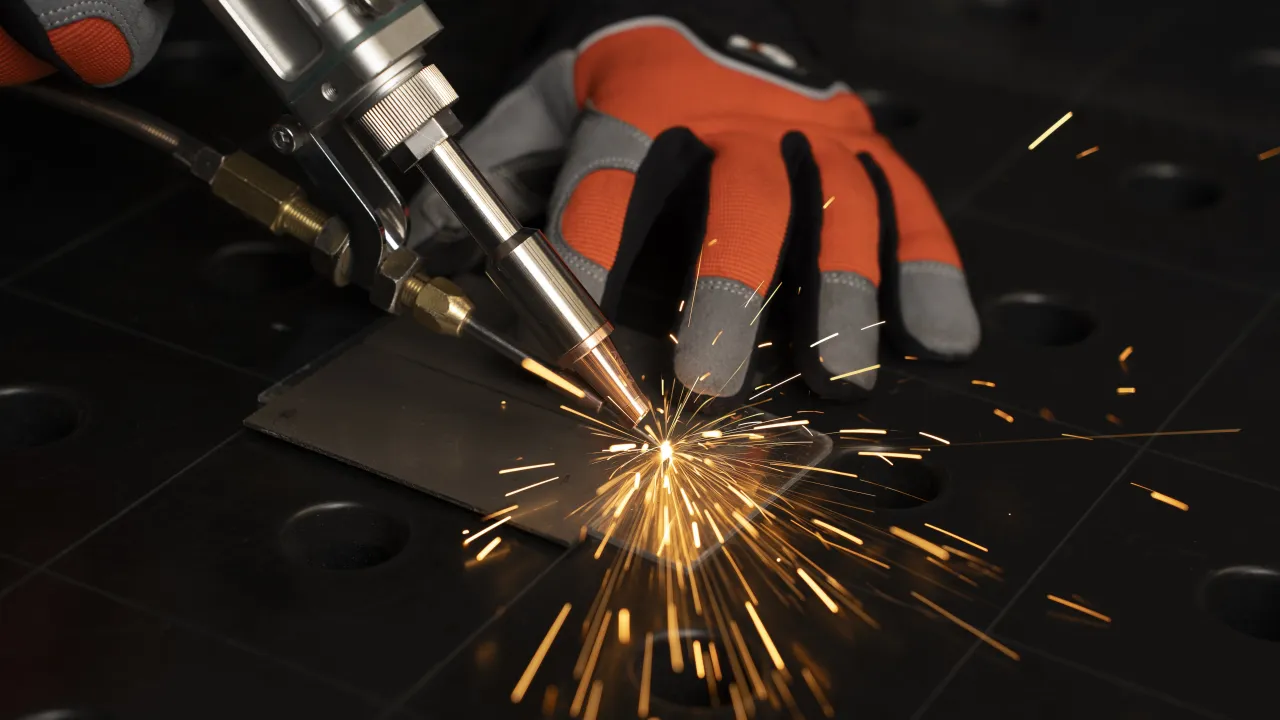
According to Aptec production, laser welding very quickly became a standard part of its manufacturing processes. The company uses the technology, among other applications, to weld thin stainless steel and aluminium components for the energy sector and heat exchanger stations.
In these applications, minimizing heat input into the material and the resulting distortion is particularly important.
The Result? A Cleaner Process and Less Post-Weld Work
“With the FANTECH laser, the need for subsequent manual weld repairs has been significantly reduced,” says Ing. Dvořák.
In addition to weld quality, the company also appreciates the high welding speed, intuitive operation, and cleanliness of the process. Reducing the need for subsequent weld finishing and repairs is one of the practical benefits that positively impacts the entire manufacturing process in daily operations.